
Date: April 16, 2026
As we move further into 2026, investors are facing a complex market environment shaped by geopolitical tensions, inflation pressures, interest rate uncertainty, and shifting global market leadership. These factors have created increased volatility but also new opportunities for those with a long-term perspective.
In this Q2 2026 market update, we break down what’s driving today’s market trends—from energy prices and investor sentiment to valuations, global equities, and portfolio strategy and what it all means for your financial plan.
Key Takeaways from the Q2 2026 Market Update
- Market volatility in 2026 is being driven by geopolitical events and inflation, but markets remain forward-looking and resilient.
- Pessimistic investor and consumer sentiment has historically led to stronger future market returns.
- Global market leadership may be shifting, with international equities and commodities gaining momentum.
- The U.S. dollar’s trend is important for the performance of gold, commodities, and international stocks.
A Volatile Start to 2026 but a Better Picture Than Headlines Suggest
Year-to-date through mid-April, major asset classes have actually held up better than many investors might expect:
- Gold: up strongly
- Small-cap stocks: solid gains
- International stocks: ahead of U.S. large caps
- U.S. large caps (S&P 500): modestly positive
- Bonds: slightly positive

But those simple numbers hide a lot of drama:
- A war-driven oil shock sent crude from around $65 to as high as $120 per barrel.
- Markets reacted with sharp, rapid declines.
- A fragile ceasefire and signs of improved supply routes helped spark a rebound.
- Many indices have since climbed back to, or even slightly above, pre-war levels.
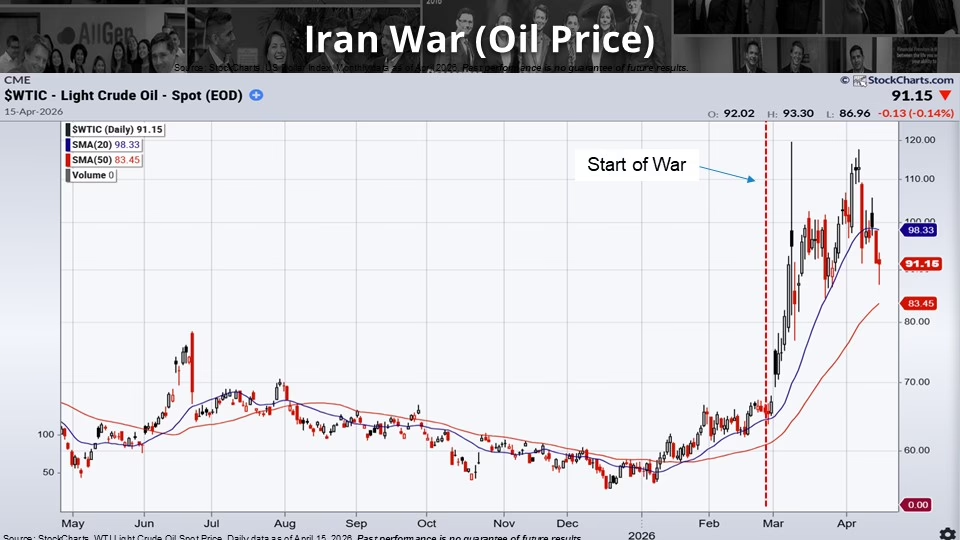
In other words, while the news cycle has been filled with fear, the market’s forward-looking nature is already pricing in the possibility that conditions may improve from here.
Why the Strait of Hormuz Matters for Your Investments
One of the most important chokepoints in the global economy is the Strait of Hormuz:
- Roughly 20% of the world’s oil and natural gas flows through this narrow waterway.
- When conflict escalated, the number of oil tankers and vessels passing through dropped sharply.
- That supply shock was a major driver of the spike in oil prices and inflation fears.
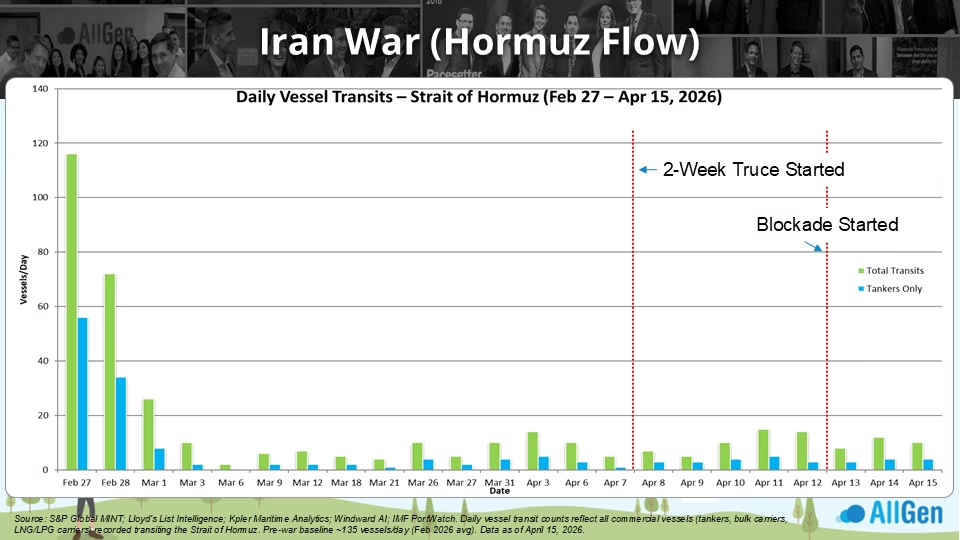
As vessel traffic has begun to recover from the post-war lows (though it remains below pre-war levels), markets have responded positively. Large institutional investors are constantly assessing data that rarely makes headlines, and they are:
- Estimating how quickly oil flows might normalize
- Weighing the impact of new or redirected pipelines
- Evaluating how long higher energy prices may persist
Investor Sentiment: Why Extreme Fear Often Signals Opportunity
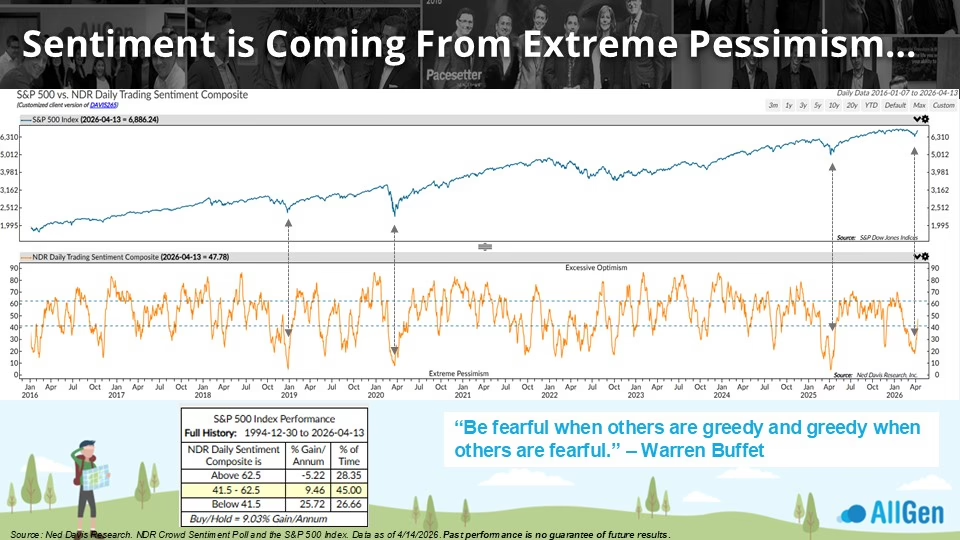
Using data from Ned Davis Research, Jason highlighted a composite indicator that tracks investor sentiment:
- At the start of the year, we were at extreme optimism—a level that historically does not bode well for future returns.
- Following the outbreak of war and market volatility, sentiment flipped to extreme pessimism—the kind of environment that has often preceded strong rallies.
Historically, when investor sentiment hits these extreme pessimism levels:
- The stock market has shown above-average forward returns.
- Investors who stayed invested—or added to positions—have often been rewarded over the next 12 months.
This doesn’t guarantee future performance, but it’s a powerful reminder that how we feel about markets is often inversely correlated with what tends to happen next.
The Behavioral Challenge: Fighting Our Instincts
Human beings are wired for “fight or flight.” When things look bad, we want to get out. When everything looks good, we want to pile in. In markets, that instinct is usually backward.
Warren Buffett put it simply: “Be fearful when others are greedy and be greedy when others are fearful.”
AllGen regularly receives calls from investors who want to go to cash after scary headlines. Those conversations are important, but the data often suggests that these emotional moments are when investors should avoid rash decisions and, in some cases, may even consider adding to long-term positions.
Consumer Sentiment: When People Feel Worst, Markets Often Do Best
It’s not only investors’ moods that matter. Consumer sentiment—how households feel about their personal finances and financial future—also has a surprisingly strong relationship to market returns.
One widely watched measure is the University of Michigan Consumer Confidence Index. Historically:
- When consumer sentiment is high (people feel good), subsequent stock market returns have been modest.
- When consumer sentiment is very low or extremely pessimistic (people feel bad about their personal finances), subsequent returns have been much higher on average.
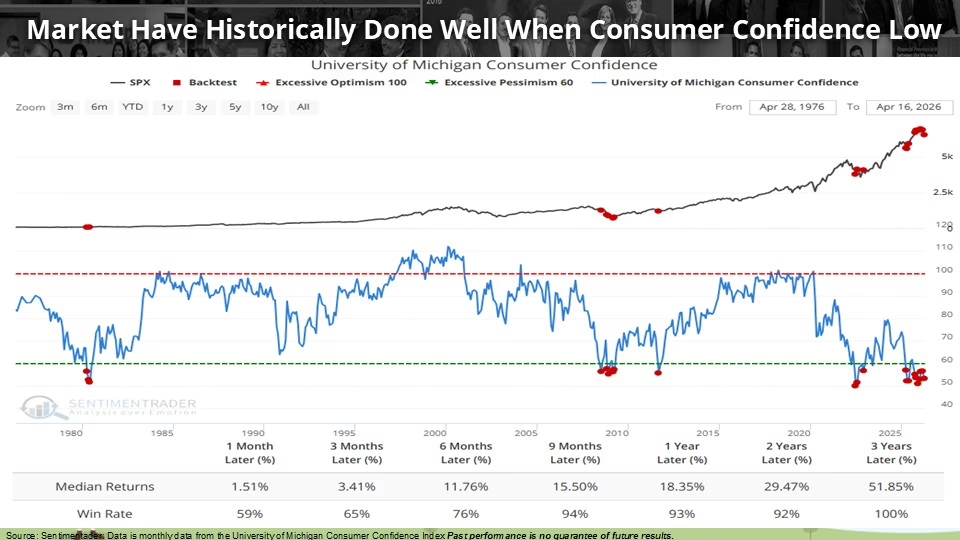
Looking at past periods when consumer sentiment has been deeply pessimistic:
- One year later: Markets were positive for the vast majority of the time, with healthy median gains.
- Two to three years later: Positive outcomes were even more common, with strong cumulative returns.
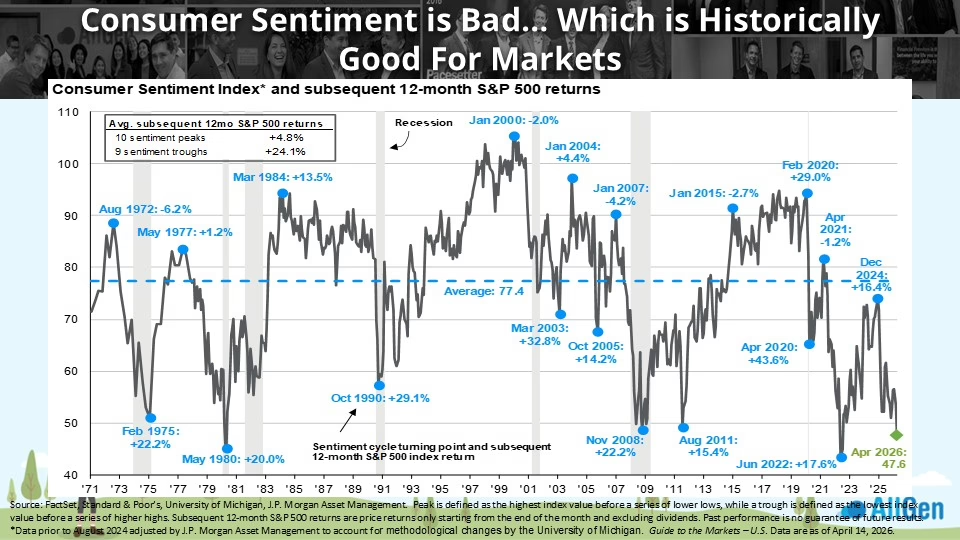
Today, consumers are again in an extremely pessimistic state. While that doesn’t guarantee gains, it does suggest that “it feels bad” does not automatically equal “it will be bad” for long-term investors.
Are U.S. Stocks Still Expensive? Valuations, Margins, and Earnings
Another part of AllGen’s 2026 market update focused on U.S. equity valuations and corporate fundamentals.
Valuations: Still Lofty, But Improving
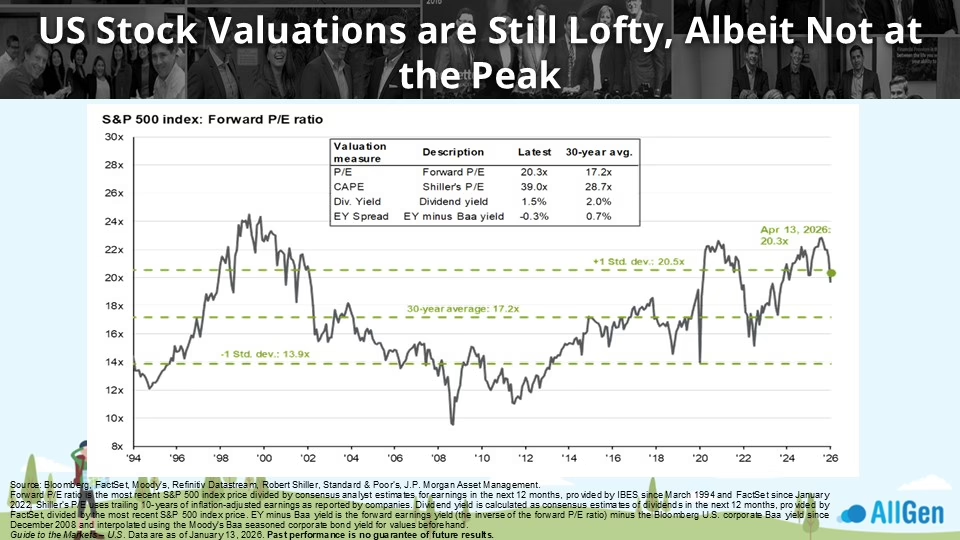
- Recently, the S&P 500 was trading at one of the three highest valuation points in the past 30 years.
- After the recent pullback and continued earnings growth, valuations have eased somewhat.
- The index is now just under a key “one standard deviation above average” level—but still above historical norms.
From a weight-of-evidence perspective:
- U.S. stocks are not cheap.
- That calls for some caution and selectivity in U.S. allocations.
Margins and Earnings: Still Supportive
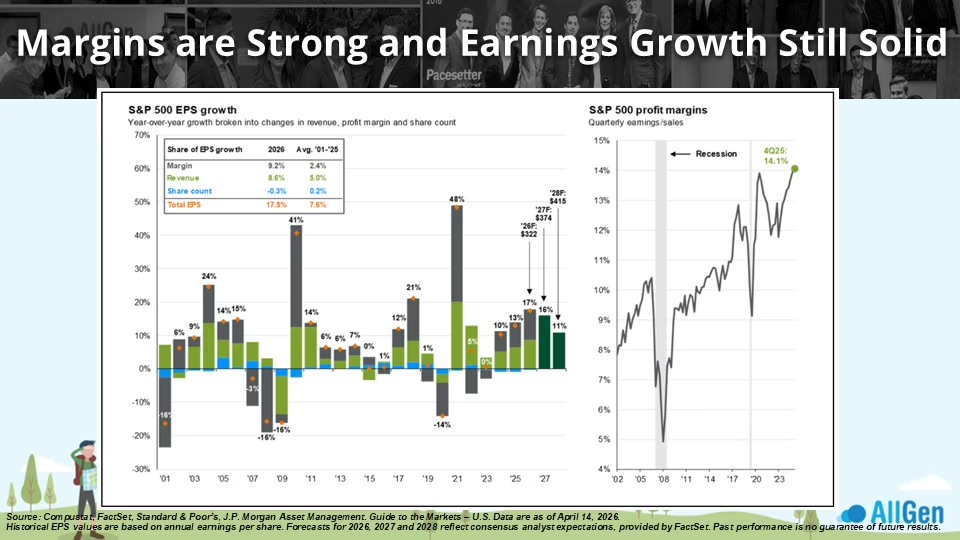
At the same time:
- Corporate profit margins are near record highs, a strong sign for underlying business health.
- Earnings growth has been robust in recent years and is projected to remain positive over the next couple of years, though estimates can change.
In combination, elevated valuations plus strong margins and earnings suggest:
- There is support for U.S. equities in the near term.
- Long-term investors should remain aware of valuation risk and avoid overconcentration in U.S. large caps alone.
The U.S. Dollar, Gold, and Commodities: A Critical Relationship
Since around 2008, the U.S. dollar has been in a long-term uptrend, despite repeated headlines predicting a dollar “crash” or replacement.

More recently:
- Since the peak in 2022, the dollar has shown signs of a shorter-term downtrend.
- Over the past year, it has been mostly range-bound, bouncing between support and resistance.
Whether the dollar breaks higher or lower will have important implications for asset allocation.
Gold vs. the Dollar
Historically, gold and the U.S. dollar have been negatively correlated:
- When the dollar weakens, gold often strengthens.
- When the dollar strengthens, gold often pulls back.
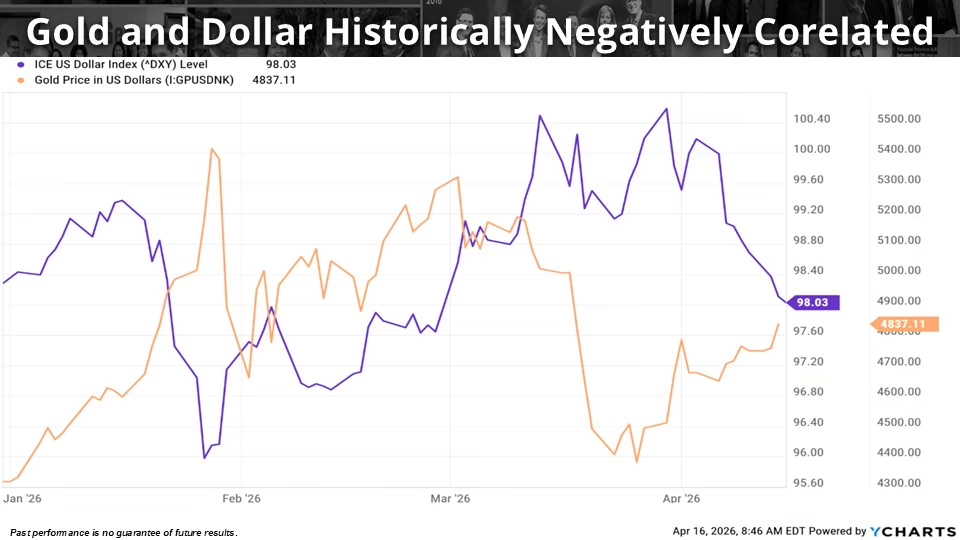
We’ve seen this dynamic in 2026:
- Gold surged early in the year.
- As the dollar strengthened during the height of the conflict, gold experienced a sharp short-term correction.
Despite that pullback, gold remains solidly positive year-to-date and appears to be in a long-term secular uptrend.
Gold’s Secular Trends

- The secular trends in gold have had significant upside
- The secular trend in the 70’s led to an 1830% upside return while the 10-year secular trend starting in 2000 returned over 600%
- The large historical upside secular trends leave the potential for further upside in gold’s current secular trend
On top of price action, central banks around the world have been:
- Increasing gold as a share of their official reserve assets.
- Continuing to buy gold even during recent geopolitical turmoil.
This combination of technical strength and fundamental demand is one reason AllGen keeps a close eye on gold within diversified portfolios.
Commodities and International Stocks: The Case for Diversification
Commodities vs. the S&P 500
For much of the past decade, the S&P 500 dramatically outperformed commodities.
However, the environment has shifted:
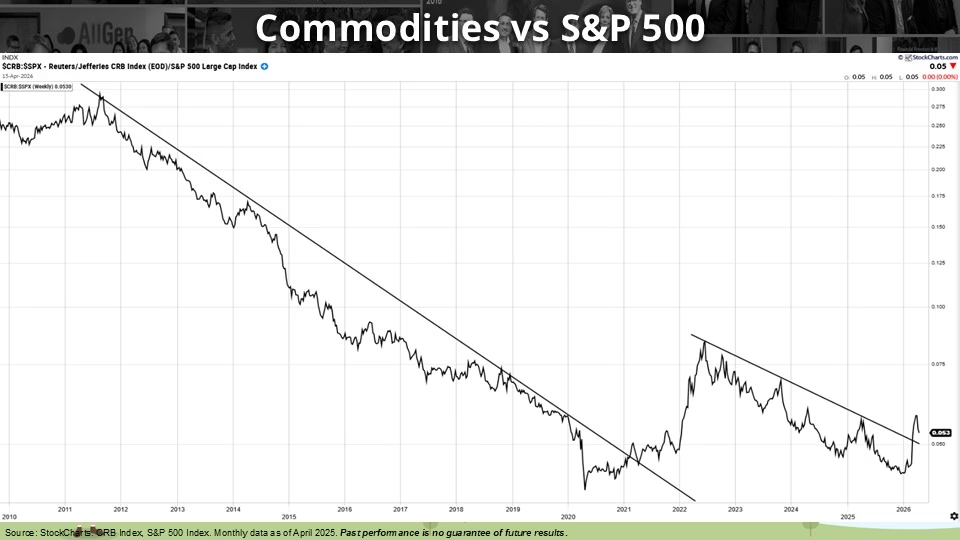
- Post-COVID stimulus contributed to higher inflation.
- Since around 2021–2022, commodities have begun to outperform U.S. stocks.
- In 2026, commodities are again showing relative strength.
International Stocks vs. U.S. Stocks
A similar story has played out between U.S. stocks and international markets:

- From 2002 to 2008, developed international stocks significantly outperformed the S&P 500—again, during a weaker dollar period.
- From 2010 through 2025, U.S. stocks led by a wide margin, drawing capital away from international allocations.
Recently, that trend has begun to change:
- Since early 2025, the long-standing trendline of U.S. outperformance has broken down.
- Over the past couple of years, international stocks have been outperforming U.S. stocks on a relative basis.
Inflation, Rates & Portfolio Structure
Inflation and interest rates continue to play a central role in shaping today’s market environment. While inflation has moderated from its peak, it remains influenced by key components—particularly energy prices, which have been volatile due to global events.
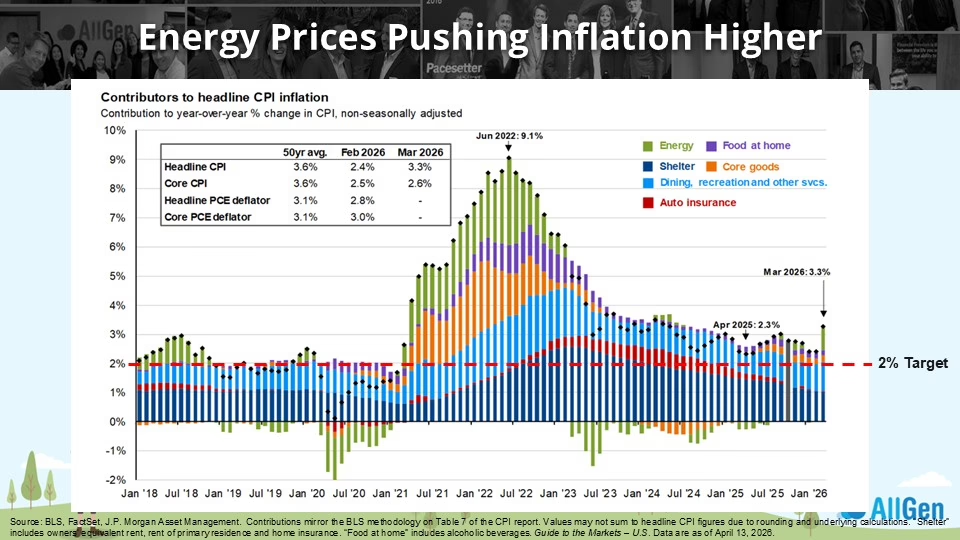
At the same time, the Federal Reserve’s path forward remains data-dependent, creating uncertainty around how long rates may stay elevated. Since inflation has recently drifted higher due to the war-driven spike in energy prices, that has cause the Federal Reserve to pause on any potential interest rate cuts. This environment has meaningful implications across asset classes and portfolio construction

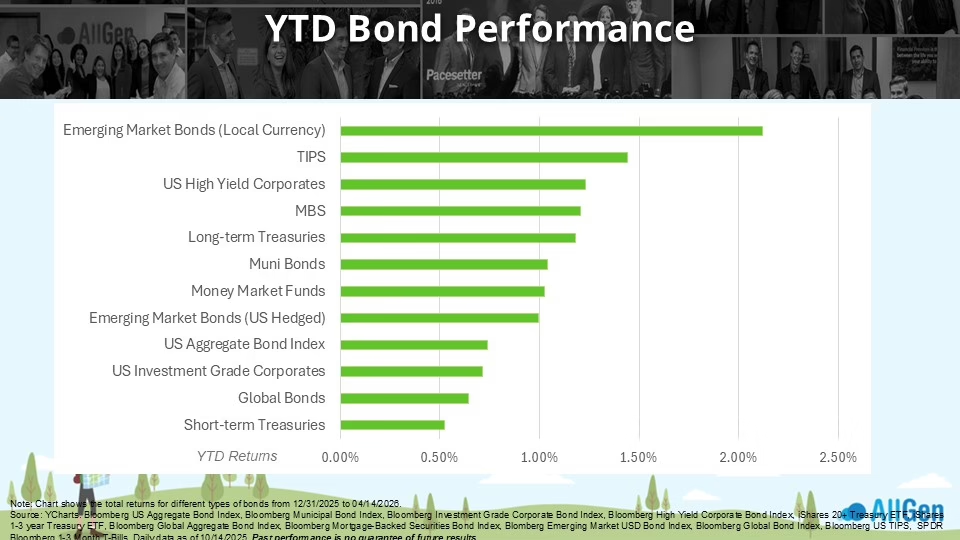
In today’s market, we are seeing:
- Continued geopolitical uncertainty, causing uncertainty
- Persistent inflation pressures, especially tied to energy and supply dynamics
- Evolving interest rate expectations, affecting both equities and fixed income
- Changing market leadership, increasing the need for better diversification
This is important because the classic “stocks and bonds move opposite each other” relationship
The AllGen Perspective
Across all these trends, one principle remains:
Successful investors stay focused on discipline—not headlines. Uncertainty is part of investing. But with a disciplined strategy and a clear financial plan, it doesn’t have to derail your progress.
At AllGen, we emphasize:
- A long-term perspective
- Thoughtful diversification
- A disciplined investment strategy
If you’re wondering how today’s trends impact your financial plan, now is a great time to revisit your strategy and ensure everything is still aligned.
Let’s take the next step together.
Schedule a conversation with our team to review your plan, ask questions, and move forward with clarity and confidence.
For more information, watch the full April 2026 Market Update video below.

Important Disclosures: The information provided here is of a general nature and is not intended to answer any individual’s financial questions. Do not rely on information presented herein to address your individual financial concerns. Your receipt of information from this material does not create a client relationship and the financial privileges inherent therein. If you have a financial question, you should consult an experienced financial advisor. Moreover, the hiring of a financial advisor is an important decision that should not be based solely upon blogs, articles, or advertisements. Before you hire a financial advisor, you should request information about the financial advisor’s qualifications and experiences. Past performance is no guarantee of future results. All expressions of opinion are subject to change without notice in reaction to shifting market conditions. Data contained herein from third party providers is obtained from what are considered reliable sources. However, its accuracy, completeness or reliability cannot be guaranteed. Examples provided are for illustrative (or “informational”) purposes only and not intended to be reflective of results you can expect to achieve. AllGen Financial Advisors, Inc. (AllGen) is an investment advisor registered with the SEC. AllGen does not provide personal financial advice via this material. The purpose of this material is limited to the dissemination of general information regarding the services offered by AllGen. The Disclosure Brochure, Form ADV Part II, which details business practices, services offered, and related fees of AllGen, is available upon request.


